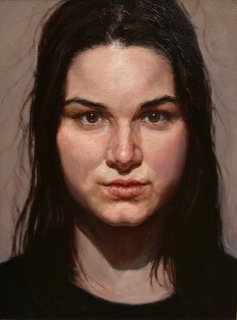
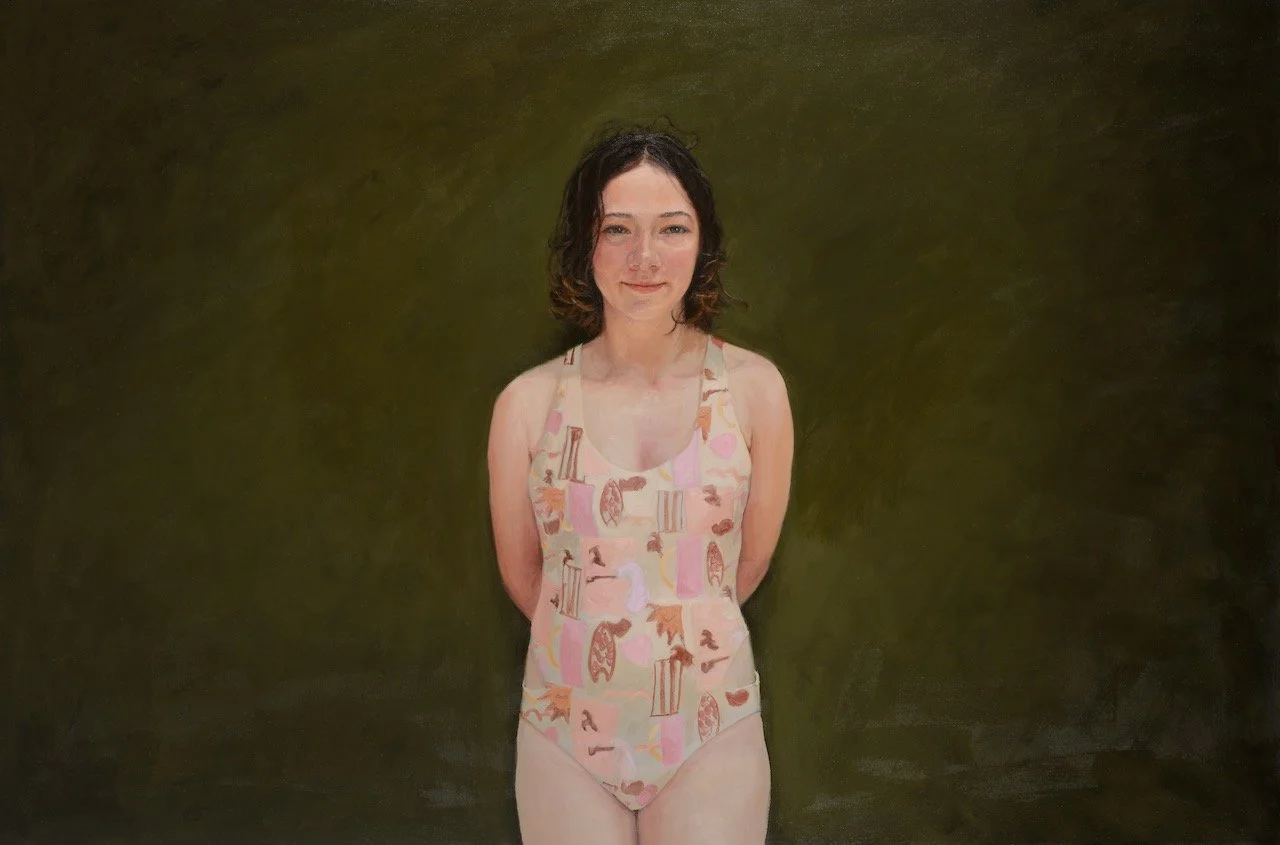
PORTRAIT WORKSHOP
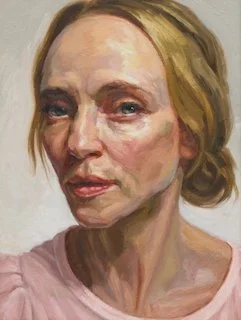
Learn an expressive approach to painting powerful portraits
WINTER 2026 - August 5, 6, 7, 8 NORTHERN RIVERS NSW AUSTRALIA
This four day workshop will give you the tools and technical understanding you need to paint powerful, convincing portraits. Emphasis will be on painting how you want to paint - enjoying the process and painting highly expressive and individual paintings.
I teach a free, intuitive approach and encourage you to develop your own individual style. The course will be comprehensive and fun, with plenty of breaks and discussion about great portraiture past and present.
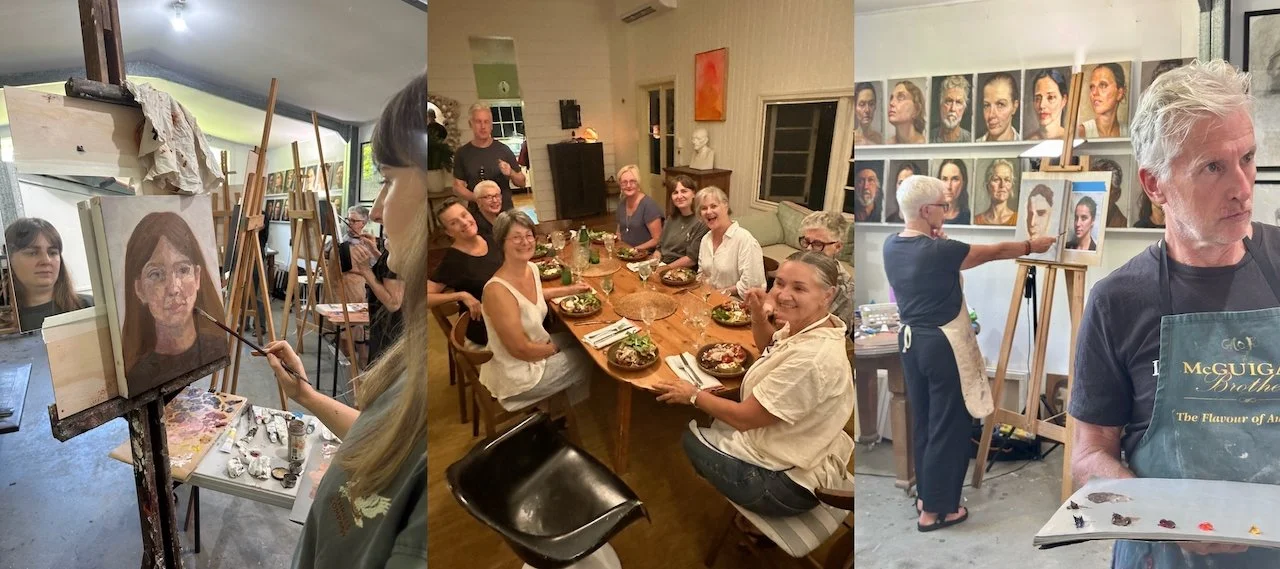
We will work both from inspiring local models and from photographs.
You will learn how to take photographs for portraits and learn the structure and proportions of the head, form, tone and colour, paint handling and brush marks.
Over four days you will complete a number of portraits and delve into different aspects of portrait painting.
Tea and coffee will be provided. Please bring your own lunch so we can all eat together on the grounds of the studio. Some painting experience is preferable but not essential, beginning portrait painters are fine.
We’ll end with an early celebratory dinner on the final day. (Included.) Full program below:
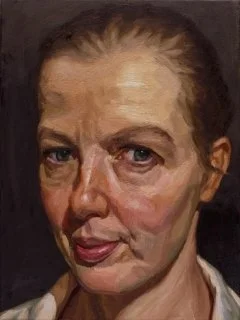
DAY 1
To start this morning you will look at how to photograph people to create powerful portraits. You will photograph a great model looking at how to light and arrange a portrait to explore ideas and compositions.
After tea we look at the basic structure and proportions of the head.
You will make three charcoal drawings from the model to help understand some key concepts and approaches. You will then do one more careful drawing concentrating on structure, proportions of the head and face and placement of the eyes, nose and mouth.
After lunch you will paint a tonal portrait from life using Titanium White, Ultramarine Blue and Transparent Oxide Red or Burnt Sienna.
You will be concentrating on tone and construction, the most important foundations of the portrait. We look at conveying form - understanding form shadows, core shadows and cast shadows, reflected light, half tones, lights and highlights, as well as edges.
DAY 2
We will begin Day 2 with a demonstration of how to mix skin colours.
In the morning we will paint from a new model, using a limited palette of Titanium White, Yellow Ochre, Cadmium Red Light or Vermilion and Ivory Black.
You will concentrate on establishing a very clear arrangement of darks and lights - beginning with a simple statement of large flat areas and working into those to optimise light/dark contrasts and achieve volume and form.
The afternoon will start with a more advanced demonstration of colour mixing with an emphasis on warm and cool.
You will then paint another portrait from life, consciously working with your choice of warm/cool colour arrangement. This might be yellow and lilac, red and green, or orange and blue.
You will be using warm/cool contrasts and harmonies to convey depth, form, atmosphere and to explore and experience the elusive magic of nuanced flesh tones in oil.
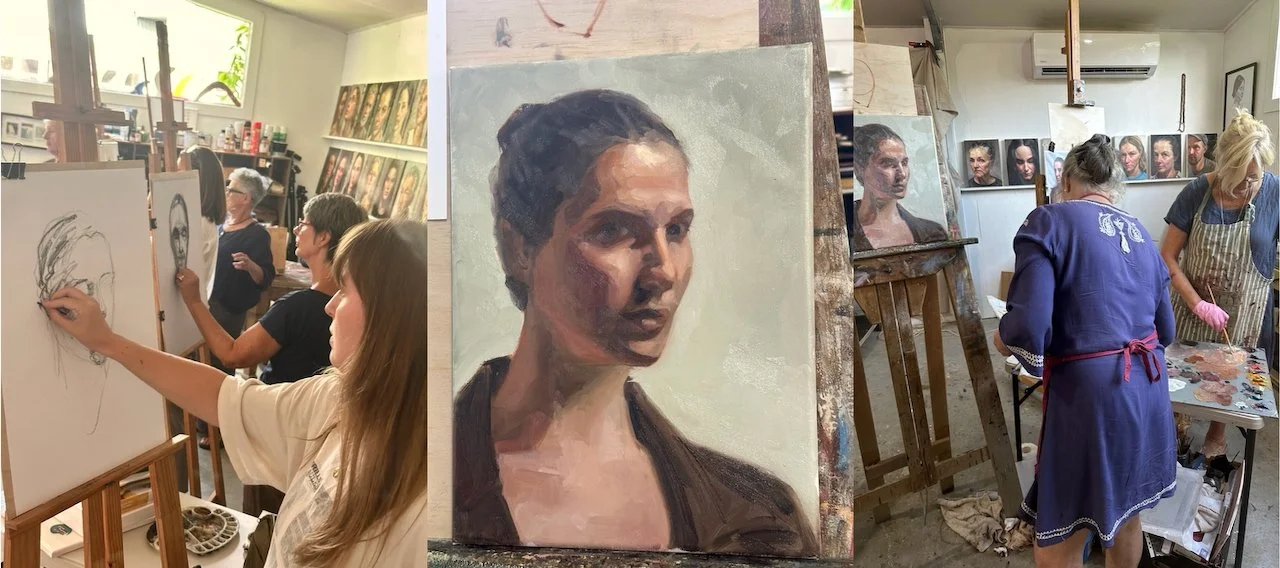
Day 3
Today you will paint a portrait from the photograph you took on day 1.
You will be encouraged to work freely and expressively, feeling into your own style and brushwork.
Relax, listen to your intuitions, and allow some of the things you have learned over the past two days to make themselves felt in your work.
You will use a palette of Titanium White, Cadmium Yellow, Yellow Ochre, Cadmium Red Light or Vermilion, Alizarin Crimson, Burnt Umber and Ultramarine Blue.
Day 4
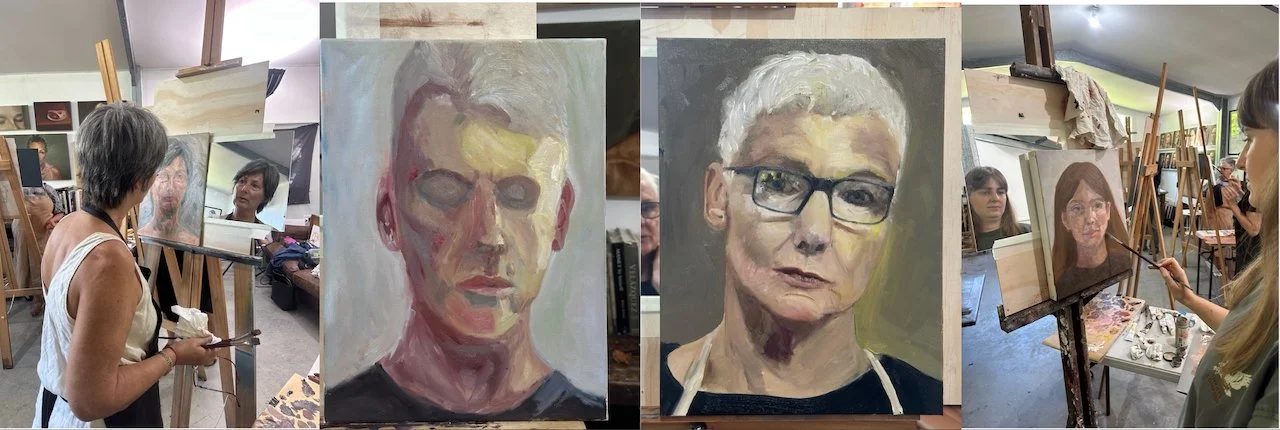
On the final day you will paint a self portrait from the mirror or from a photograph taken on the first day, using a full palette (see materials).
MATERIALS
Paint
The course is taught in oils.
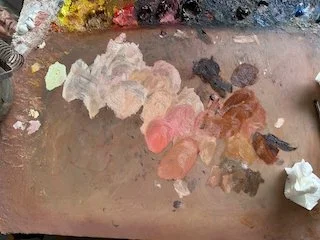
There are no colours that are right or wrong on a palette, but there are palettes that are more manageable, more versatile and more likely to assist rather than hinder you in painting a successful portrait.
Essential Colours
Titanium White, Cadmium Yellow or Cadmium Yellow Light, Yellow Ochre, Transparent Oxide Red or Burnt Sienna (these achieve similar ends but I much prefer Transparent Oxide Red), Cadmium Red Light or Vermilion, Alizarin Crimson, Burnt Umber, Raw Umber, Ultramarine Blue, Ivory Black.
Others
You can add Cadmium Lemon plus Cadmium Yellow rather that just Cadmium Yellow Light or Cadmium Yellow. Also Cerulean Blue. You can also add Viridian or Terra Verte (a more subtle green in mixes).
Choosing a palette is not purely technical - if you love a colour and it makes you feel good or inspires you, put it on. Some people will gravitate towards a more limited palette, other to a wider array of colours. But generally the fewer colours on your palette, especially to begin with, the better.
Paint Brands
There are many excellent brands of oil paint. Do not buy student grade paint - they have filler instead of pigment and you will battle to get good results.
I use a number of brands including Windsor & Newton Artists’ Oil Colours, Old Holland, Art Spectrum, Langridge and Michael Harding. Any of these and any other good brand are fine.
Surfaces
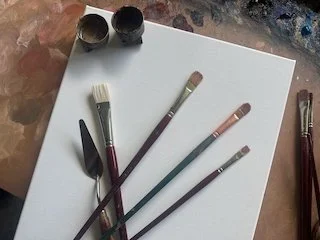
You will need five or six primed canvasses or boards in a size you feel comfortable with. I would suggest smallish - around 30x40cm. If you want to paint larger, bring bigger brushes.
Brushes
Good hog’s bristle brushes. (MUST be hog’s bristle.) A couple of number 8 Bright (square in shape and longer than Flats), one or two number 6 and perhaps a 4. A couple of wider brushes (10 or 12) are good to have.
Filberts are also fine, but I do find Brights are more conducive to expressive brush work.
A palette - NOT white - wooden or grey. A grey paper palette pad is fine. With a dipper or small containers for solvent and oil. A palette knife is handy.
Mediums
Solvent 75. Refined linseed oil.
Also
Paper towel or cloths to wipe your brushes.
A2 or so drawing paper. White, or toned if you prefer. If toned, bring a white pastel as well as charcoal.
Some vine charcoal. Kneadable eraser.
HOURS LOCATION AND SETTING
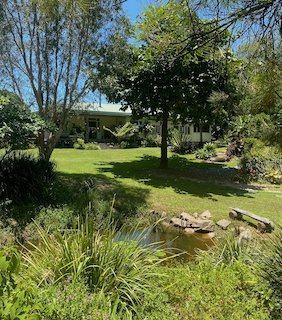
The workshop will run in an air-conditioned studio set in beautiful surrounds, in Mullumbimby near Byron Bay Australia.
Hours will be from 9:30 am to 4:30 pm with frequent short breaks and breaks for morning and afternoon coffee or tea as well as a lunch break.
PRICE
$850. Please secure your place with a $200 deposit. Balance two weeks prior to start of workshop.
WHAT’S INCLUDED
All tuition, easels, drawing boards, mirrors, models, coffee and tea, final celebratory dinner. Maximum 8 people.
Please bring your lunches so we can all eat together. BYO alcohol for dinner if required.
rhodes.dale@gmail.com dalerhodespaintings.com instagram dalerhodespaintings
Please email rhodes.dale@gmail.com to reserve your place or enquire.
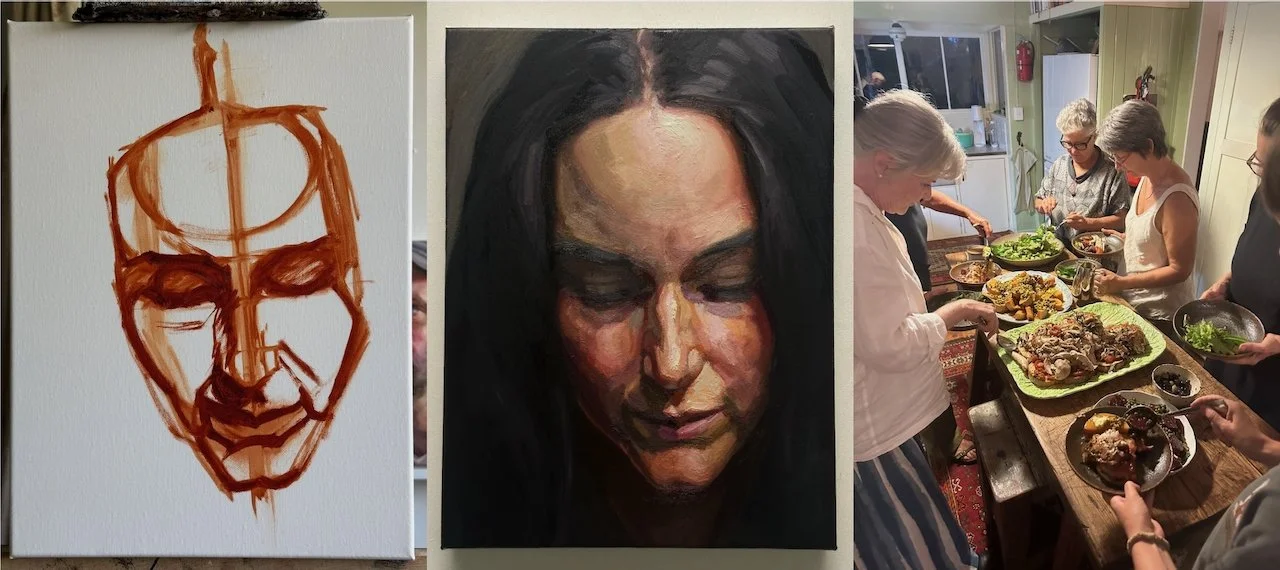
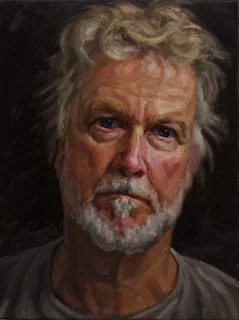
Dale is an Archibald finalist and a finalist in the Doug Moran National Portrait Prize and the Lester Portrait Prize. He has been hung in the Archibald Salon Des Refuses and has been a finalistin the Northern Rivers Portrait Prize and the Wollumbin Art Award as well as being included in the top 50 of the American Society of Portrait Painters International Portrait Prize and pre-selection in the Royal Society of Portrait Painters Annual Exhibition.
Dale has drawn and painted and taught drawing and painting for many years, both privately and with Byron Community College and Byron School of Art.
“I learned more from Dale in one course than from three years in art school.”
“What I learned from Dale years ago is still the foundation of my daily practice.”
“I now know how to mix colours.”